
GUIDE · EXISTING BATHROOM CONDITIONS
After around 15 years of residential renovation work, one lesson keeps coming back: visible finishes don’t tell you everything about the condition of a room. A bathroom can look tired but sound, or look fine and have problems sitting behind the tiles. This guide explains what’s usually underneath, how concealed damage tends to come to light, and why the scope of a bathroom renovation can change once the existing finishes are removed.
IN THIS GUIDE
When homeowners describe their bathroom, they describe the finish. When I look at it, I’m thinking about what that finish is attached to.
LAYER 1 · FINISH
This is what photos show: cracked tiles, discoloured grout, peeling paint, worn silicone. It’s useful evidence, but it’s a symptom layer, not the whole story.
LAYER 2 · SUBSTRATE
The surface the finish is bonded to. If it has softened, cracked or lost adhesion, new tiles laid over it inherit the same weakness. Substrate deterioration is often invisible until tiles are lifted.
LAYER 3 · BEHIND
Studs, floor structure, pipes and wiring. Where plumbing or electrical work is involved, I coordinate appropriately licensed specialists rather than doing it myself.
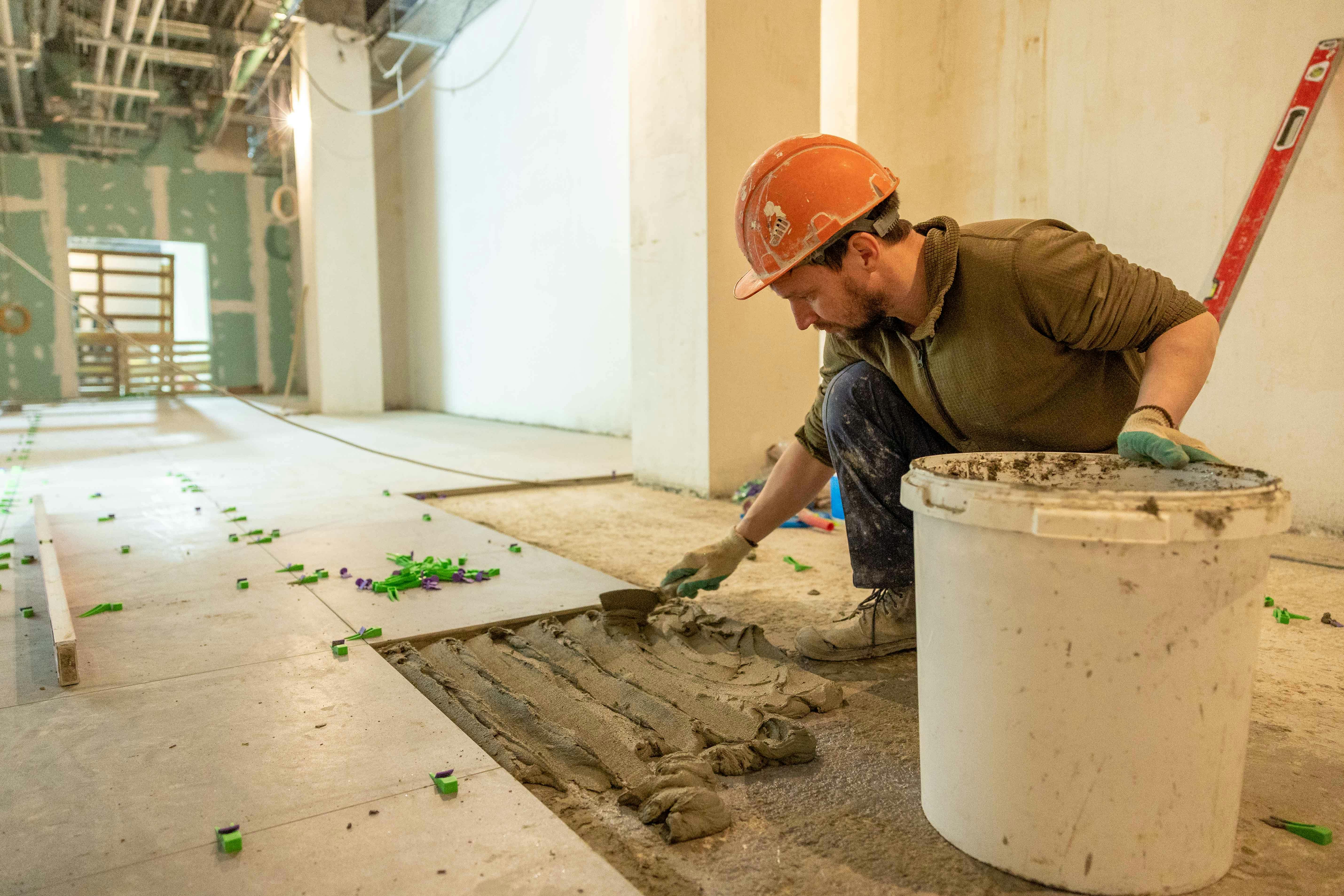
Reference photo: the bedding layer beneath a tiled floor.
01 Photos. Your photos show the finish layer and help me understand what you’d like to change. They’re a starting point, not a scope.
02 Site inspection. In the room I look for clues: tiles that sound hollow when tapped, cracks running across several tiles, staining around the shower or vanity, swollen cabinetry, flaking paint near the ceiling, or a floor that feels uneven.
03 Honest limits. Clues suggest a problem; they rarely confirm its extent. I tell you what I can assess, what I recommend and where uncertainty remains.
04 Removal. Once the existing finishes come off, the substrate and what’s behind it can be seen properly. This is the point where concealed damage is actually confirmed or ruled out.
A new finish is only as reliable as the surface beneath it. Tiling over a substrate that has lost adhesion, or painting over damp, deteriorating plaster, can make a bathroom look renewed for a while without dealing with the cause. That’s why I spend time on what comes before the finish: removing failed material, checking the surface is sound and flat, repairing or replacing what isn’t, and only then moving on to tiling and finishing.
The proposed work for any bathroom depends on its existing condition, layout and materials, and on any specialist or approval requirements. Concealed damage, substrate deterioration and layout changes can all affect the final scope and cost. I can’t promise that removal will reveal nothing, and I won’t pretend otherwise.
What I can do is be clear early. Before work starts, I explain which parts of the room carry the most uncertainty. If something unexpected appears once tiles or sheeting are removed, I stop and talk it through with you, explain the options and agree on the next step before going further.
WHO HANDLES WHAT
If concealed problems involve plumbing connections or electrical fittings, that work goes to appropriately licensed specialists, whom I coordinate. Structural engineering and architectural design aren’t part of my personal offering; where they’re needed, you’ll be told plainly.
READ NEXT
Repair or Full Renovation? How to Decide
Renovating a Bathroom Without Changing the Layout