
Home  /  Renovation Services  /  Bathroom Tiling

02 · BATHROOM TILING

Cracked tiles usually raise the question. They don’t answer it.

Bathroom tiling that starts beneath the tile

If your bathroom tiles are cracked, loose or ageing, or the grout has discoloured, the first job is to understand why. I’m Ivan Bodnar, an independent renovation specialist in Melbourne. Before I recommend what should go back on your walls and floor, I look at the surfaces behind the tiles.

Melbourne and surrounding suburbs · 9am–6pm, seven days

Gloved worker using a blue tile-cutting tool on large floor tiles, with tile spacers on a concrete surface.
Here’s what tiles can and can’t tell you.

Visible finishes don't show the whole wall

A tiled surface can look tired and still sit on a sound base. It can also look acceptable while the substrate behind it has started to deteriorate. Cracked tiles, hollow-sounding areas, lifting edges and grout that keeps breaking down are all worth investigating, but none of them confirms the cause on its own.

That’s why I don’t treat bathroom tiling as a simple surface swap. Photos help me understand what you’d like to change. The site inspection is where I can check the existing bathroom conditions and explain what I can assess, what I recommend and where uncertainty remains. You’ll find more on this in What Visible Finishes Don’t Tell You About a Bathroom.

FOUR LAYERS I CHECK

From the tile face back to the frame

01

Tiles and grout

This is what you see. I note any cracking, crazing, discolouration and missing or failing grout, and where the damage is concentrated.

02

Adhesive and bedding

Whether a tile is firmly bonded or sounds hollow says a lot about how it was laid and how it has aged.

03

Wall and floor substrate

Sheeting, render or screed has to be sound, flat and dry enough to tile over. If it has deteriorated, the scope changes.

04
What sits behind

This layer covers the wet-area membrane, pipework and fittings. Where plumbing or electrical work is needed, I coordinate appropriately licensed specialists.
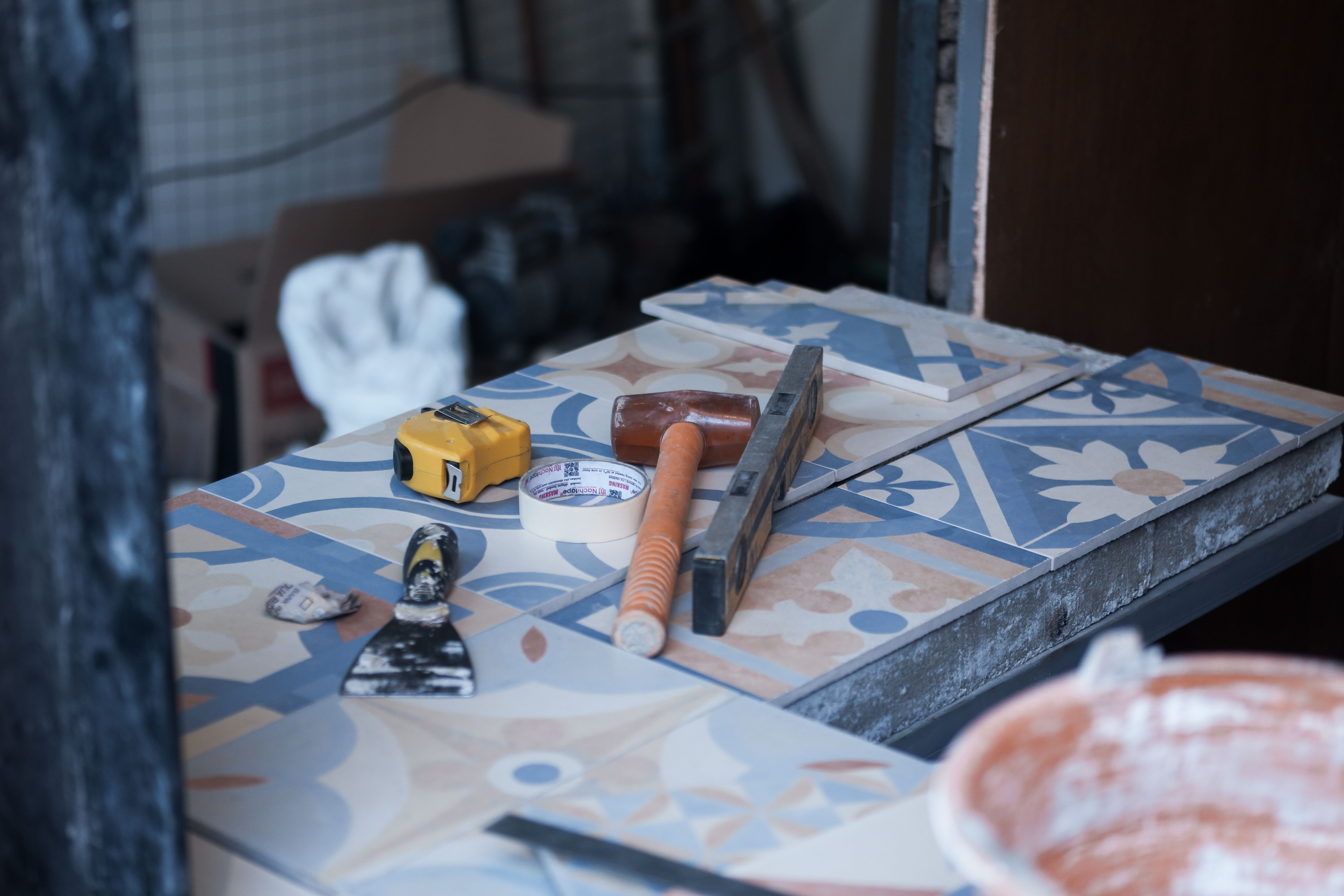
Tiling tools including a tape measure, mallet, level and scraper arranged on patterned decorative tiles.

WALL AND FLOOR TILING

Most of the work happens before the first tile is laid.

Tiling the walls and floor of your bathroom

Once I understand the substrate, I prepare it properly before setting out the new tiles. Where needed, that means removing old tiles and adhesive and repairing or levelling the surface. I also plan the set-out so that cuts fall where they’re least noticeable around the shower, vanity and floor edges.

Walls and floors need the same discipline, but they face different demands. Floors take foot traffic and need suitable falls in wet areas. Walls need a stable, true surface so the tiles sit flat. I’ll talk you through tile size, finish and grout choices in practical terms, based on how your household uses the room every day.

Sometimes the honest answer is a bigger job.

When tiling becomes a bathroom renovation

The work can go beyond tiling if the inspection shows substrate deterioration or concealed damage, or if you’d like to change fixtures or the layout. If that happens, I’ll explain the options and how they connect. You can read more about larger projects on Bathroom Renovations in Melbourne.
Every tiling scope depends on the existing bathroom’s condition, layout and materials, and on any specialist or approval requirements. Damage that only shows once the old tiles come off can affect the final scope and cost. That’s why I discuss it with you before any work continues. How costs and scope are worked out →

You’re also welcome to call or text 0413 142 055, 9am–6pm, seven days.